The temptation of an easy explanation
The participation of a critic in a governing agreement lends itself to two convenient narratives. Opponents can portray any cooperation as betrayal, while defenders can justify any compromise as a patriotic sacrifice. Neither narrative alone explains what was agreed upon, what was achieved, or what the cost was. A coalition must be examined based on its decisions and the terms of participation.
La Palabra Compartida addresses the relationship between Uslar Pietri—and the National Democratic Front—and the broad-based government. The episode interprets their participation as a quest for governability and describes a subsequent rift when the agreement came to be seen as a mere distribution of positions. This interpretation helps frame questions;it does not turn every judgment made in the program into a documented confession by the protagonists themselves.
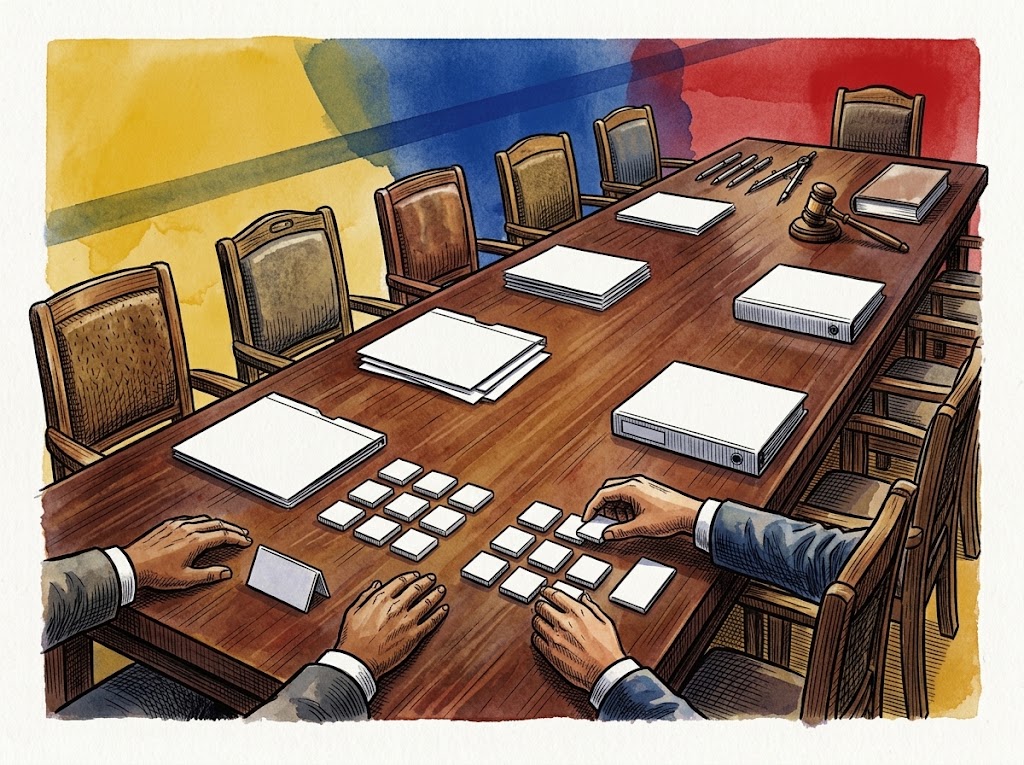
An agreement requires more than just participants
Governability requires the capacity to make decisions and uphold rules. A coalition can provide stability if it shares defined commitments, allows for the assessment of their fulfillment, and accepts limits. However, it can turn into a pact of mutual protection when holding office takes precedence over the policy agenda. In that case, maintaining the agreement matters more than rectifying a failed administration.
The distinction becomes apparent through specific questions. What responsibilities does each organization assume? What measures justify its presence? Can an official lose their post due to poor performance, even if their party threatens to withdraw? If every area has a protector, the administration fragments into separate fiefdoms. Citizens find many officials nominally in charge but little actual accountability.
The critic who also had to make decisions
Uslar’s trajectory compels us to examine a political life that cannot be reduced to a caricature of resentment. He opposed the 1945 coup, suffered its consequences, and later participated in the institutions and agreements of the democratic era. His persistent criticism of partisanship coexisted with attempts to operate within that very landscape. That tension is an integral part of his public experience.
His figure gains depth when examined through the lens of the decisions he made and the costs he incurred. A defense of his legacy that glosses over his alliances leaves the reader without the tools to understand him. Conversely, a dismissal that reduces his entire body of work to those alliances is equally unhelpful. The crucial issue is what he hoped to achieve and why an agreement could end up replicating the very thing it sought to correct.
The State is not a mechanism for dispensing compensation
MVGA rejects the notion that rebuilding a Republic requires compensating every organization with an administrative fiefdom. While a coalition may be necessary under certain circumstances, that necessity does not legitimize just any division of power. Citizens should not have to bankroll the internal peace of leadership elites in exchange for substandard services and inexplicable appointments.
The experience examined in Arturo es el hombre raises a question for the present: what prompts one to abandon an agreement when it no longer serves the country? An organization that never finds sufficient reason to relinquish its positions ultimately reveals its true priority. Governance is valuable only if it enables responsible leadership;when it merely guarantees the continued tenure of the participants, consensus becomes just another name for privilege.