A conversation that requires specific names
Ideas become impoverished when a slogan replaces the actual reading of those who originally contemplated the issue. Arturo Uslar Pietri and Alberto Adriani figure prominently in the Venezuelan conversation regarding production and oil. The similarity of their concerns has sometimes led to a confusion of their distinct contributions. Acknowledging an influence does not justify automatically attributing the authorship of a specific text or phrase to the other person.
"La Palabra Compartida Presenta" examines this relationship in Sowing the Oil: Origin and Meaning. It revisits Adriani’s concern regarding agriculture and diversification, linking it to Uslar’s ideas on the use of oil revenues. The episode also distinguishes the discussion of these ideas from the attribution of the well-known formula.
Adriani and the productive base
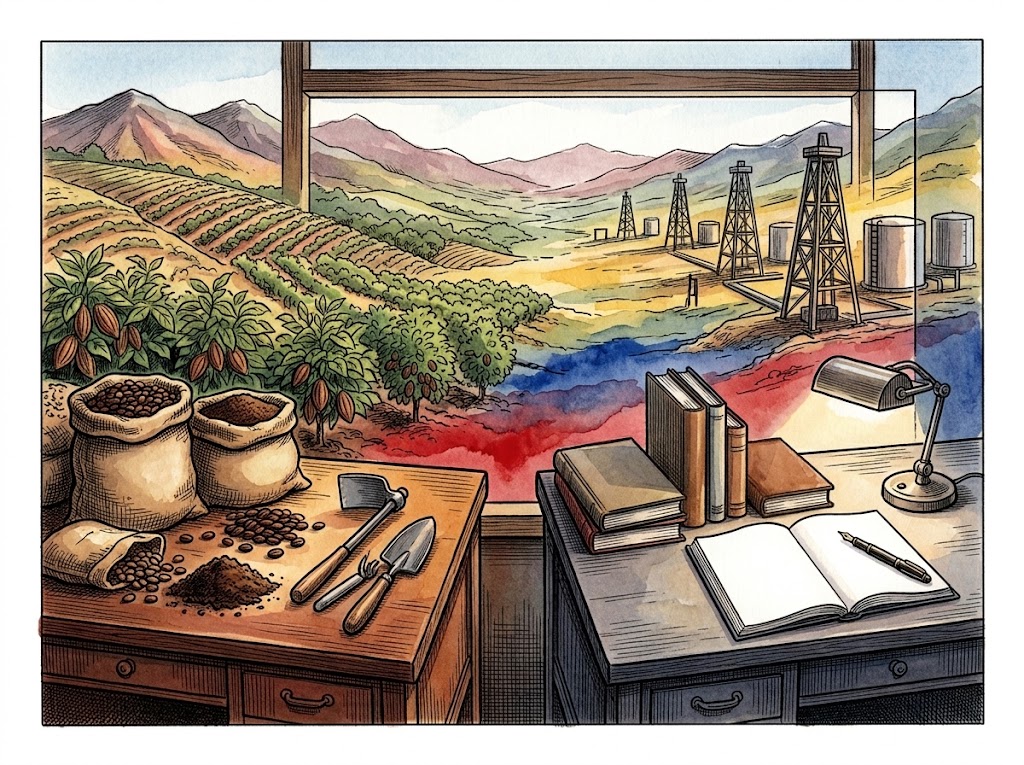
In this program, Adriani addresses an agricultural economy in need of transformation, knowledge, and diversity. Dependence on a few products renders the country vulnerable. The response requires more than merely celebrating a natural advantage; conditions must be organized to improve production and sustain activity in the face of external changes.
This approach places the producer and economic capacity at the center. Possessing land is not synonymous with having a developed agricultural sector. Techniques, connections, training, and market access are what matter. The argument serves as a warning against policies that expect wealth to arise simply from resource ownership, without considering the labor required to harness those resources effectively.
Uslar and the fate of extraordinary rent
Uslar’s approach, as developed in the episode, asks what should be done with revenue derived from extracted wealth. Oil can either finance a productive transformation or sustain habits that depend indefinitely on its flow. The issue is not whether to reject it, but whether its utilization creates additional means of livelihood.
The two issues are related but not interchangeable. Diversifying an agricultural economy and converting oil rent into lasting capabilities operate on different planes that must be distinguished. This precision allows for the recognition of shared views without fabricating a perfectly unified joint doctrine. It also prevents the use of friendship, generational proximity, or thematic similarities as sufficient proof of authorship.
A legacy versus rentier complacency
The perspective offered by MVGA highlights a vital insight: the country needs to produce, and it cannot gauge its strength solely by what it extracts or sells. This concern runs counter to a state culture that promises well-being through the management of wealth deemed inexhaustible. If citizens merely receive, knowledge and initiative become subordinate to the distribution system.
Returning to Uslar and Adriani allows us to demand a different kind of economic conversation: which activities can be sustained, what institutions are needed, and what barriers prevent their development. It is not a matter of choosing a name to embellish the rhetoric of reconstruction. It is about revisiting questions that compel us to evaluate the State based on the capacities it helps create and the initiatives it allows to flourish without absorbing them.