Two different presidencies
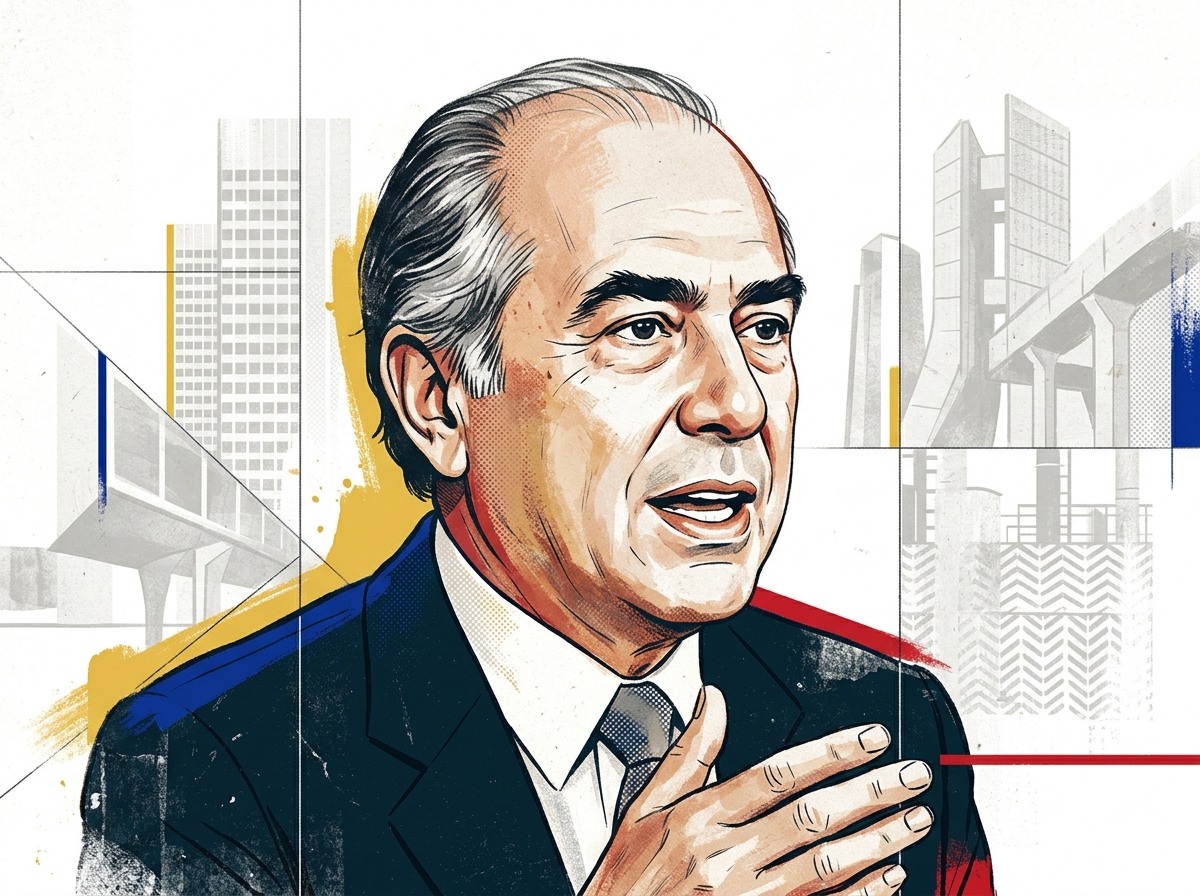
Carlos Andrés Pérez (CAP) was president in two non-consecutive periods: 1974–1979 and 1989–1993. The same figure who in his first government embodied the promise of a "Great Venezuela", in his second he faced an economy with accumulated imbalances and less room to finance the previous model. Comparing both periods helps to understand how the country changed and what costs the boom left pending.
His first term coincided with the global rise in oil prices. The government expanded public investment, promoted industries, promoted services and nationalized iron and oil. The oil industry passed into state hands in 1976 and PDVSA began operating. That decision had broad nationalist support and sought to ensure that the income and management of the strategic resource remained under Venezuelan control.
The expansion also raised expectations of what the state could do. Large programs required an administration capable of planning, executing, measuring costs and sustaining services. The oil surge facilitated projects, but it did not eliminate productivity limits or guarantee that each investment generated lasting capacity. The challenge of CAP I was to convert an extraordinary boom into an economy less dependent on the next boom.
Nationalization, by itself, did not resolve how the industry would be governed or how its revenues would be translated into widespread productivity. The creation of PDVSA established a state company with technical capacity that would later be a source of national pride; At the same time, it placed a growing part of the economy under the decisions of a State whose accountability had to be strengthened. The balance requires observing both the capacity created and the political and fiscal dependence that continued to grow.
The return in the midst of the crisis
Pérez returned to the presidency in February 1989 in a very different context. The fiscal and external crisis, debt, inflation and the exhaustion of exchange controls limited the ability to repeat the strategy of the seventies. On February 16, it announced a macroeconomic adjustment program that included reduction of subsidies, changes in prices and rates, opening and reforms. The government argued that it was necessary to correct imbalances; Affected sectors faced abrupt increases in the cost of living.
The Empresas Polar Foundation records that in 1989 inflation was estimated at 84.5% and the economy contracted around 8.1%. He also notes that reserves increased and fiscal and external deficits were reduced. These indicators describe macroeconomic results for the year, not the complete social cost or proof that each measure was correct. A fair evaluation must consider both sides and distinguish between the program design, its sequencing, and the ability to protect vulnerable households.
The package was announced shortly before some transportation increases were implemented. Between February 27 and the following days, protests and looting took place in Caracas and other cities, known as the Caracazo. The state response included suspension of guarantees and use of security forces. The number of deaths and the exact reconstruction of events are matters that must be discussed with judicial and human rights sources; The documented violence and violations cannot be hidden behind the economic debate.
Coups and democratic fragility
The government faced two military coup attempts in 1992, on February 4 and November 27. Both sought to overthrow an elected president and were defeated. The difficulties of democracy do not make a military insurrection a legitimate solution. The crisis had to be resolved through civil mechanisms, reforms, elections and constitutional accountability.
Pérez became increasingly politically isolated. In May 1993, the Supreme Court declared that there was merit to prosecute him and the Senate authorized the process, with his removal from office. The case referred to the use of 250 million bolivars from a secret item. On May 30, 1996, the Court sentenced him to two years and four months for aggravated generic embezzlement. The declaration of merit, the separation of power and the sentence were different acts. The conviction must be described by the crime resolved, without turning it into evidence of personal appropriation of all those funds or of all political complaints against his government.
The suspension showed that constitutional mechanisms could act against a sitting president. It also occurred in an environment of deep wear and tear, under public pressure and with political calculations. Democratic institutions are not perfect just because a procedure is legal; Its legitimacy also depends on clear rules, evidence, defense and consistent application.
A balance that resists the slogan
Pérez represented an ambitious version of the oil state: during his first government, the country sought to accelerate modernization through public companies, investment and large projects. During the second, he attempted to modify a system that could no longer be sustained by disposable income. The decisions of both stages had consequences that deserve particular analysis.
His figure should not be presented as the sole cause of Venezuelan decline. The deterioration was cumulative, involving different governments, international changes and institutional problems. Nor should the leadership be exonerated from responsibility because some tendencies were inherited. Authorities choose how to respond to crises and must explain their decisions to citizens.
The lesson for MVGA is that the ability to lead is not measured only by the audacity to announce change. It is also measured by the preparation of the measures, the transparency of the accounts, respect for rights, the protection of those who assume the immediate cost and the ability to build democratic support. An adjustment may be necessary and still be poorly designed or executed. A work can be valuable and, at the same time, financed irresponsibly.
CAP left two political images that contradict each other only if the context is ignored: the president of abundance who promised to transform the country and the ruler who applied an economic turnaround in the midst of a severe crisis. History must keep both in view. Instead of only asking whether he was a good or bad president, it is worth asking what institutions allowed spending to expand without building resilience, how the costs of adjustment were distributed, and what protections are needed so that a reform does not become a social crisis.
Sources and references
- Polar Business Foundation, Carlos Andrés Pérez.
- Polar Business Foundation, governments of Carlos Andrés Pérez.
- Polar Business Foundation, February 27, 1989.
- Human Rights Watch, Venezuela: Human Rights in the Aftermath of the Caracazo (1993): Check source
- Washington Post, contemporary report of May 22, 1993 on Pérez's suspension and the judicial process: Check source
- IMF, Venezuela economic report of 1996.
- CIDOB, political biography of Carlos Andrés Pérez, chronology of the pretrial and the 1996 sentence.